
Published by The Wise Verdict Editorial Board • Updated for 2026.
The $600 Lesson: Why Phone Case Durability is the New Insurance Policy
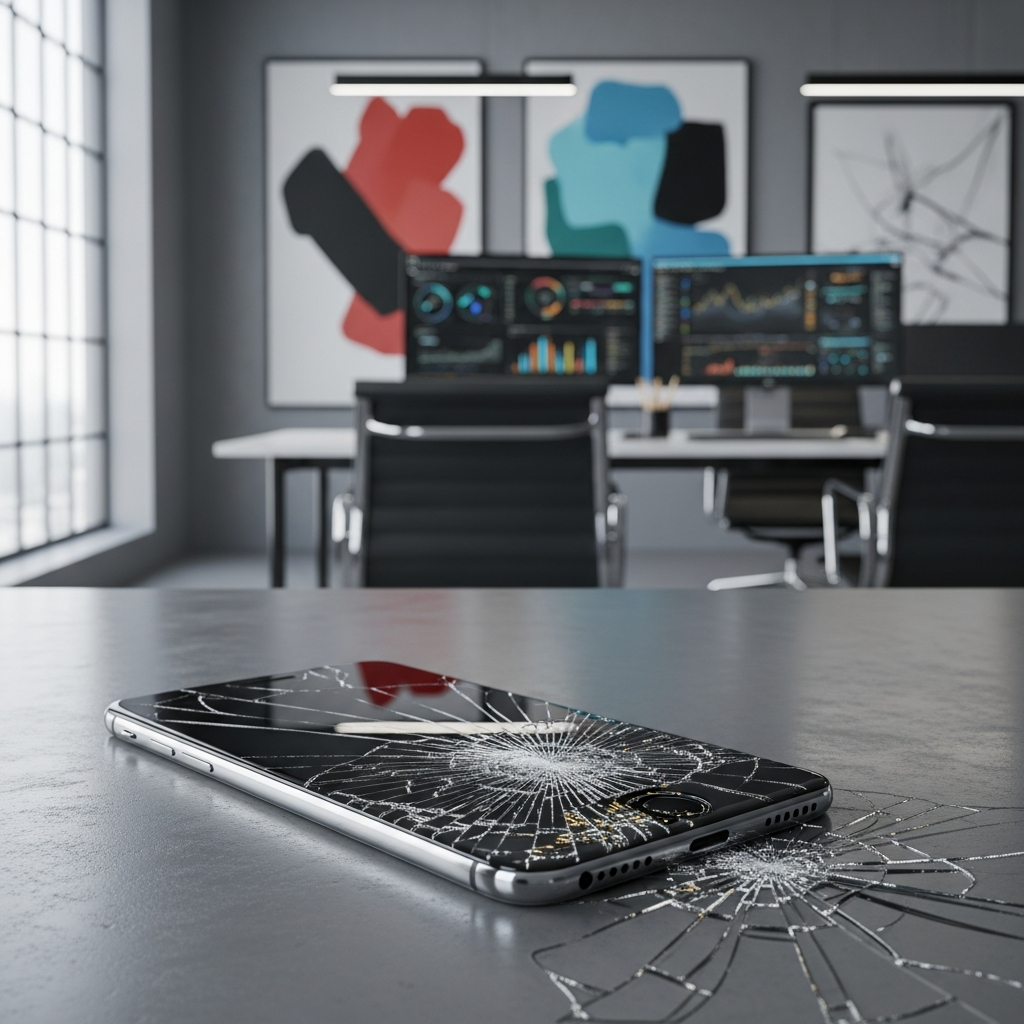
The sound of glass meeting pavement is, for the modern American consumer, the immediate, visceral soundtrack of financial regret. It is a moment of stark realization: that $12 piece of injection-molded plastic, chosen purely for its low price and slim profile, failed spectacularly. In 2026, when flagship device repair costs routinely eclipse the price of a mid-range replacement device, trusting your $1,400 technology investment to flimsy protection is not just cheaping out—it is financial negligence. This investigation from The Wise Verdict dissects the true cost of poor **Phone Case Durability** and provides the data necessary to protect your handheld future.
The Wise Verdict Summary
- The Durability Dividend: A high-quality, impact-rated case (typically $50-$80) offers an ROI exceeding 800% when factoring in the average $485 out-of-warranty screen replacement cost for 2026 flagship models.
- The Hidden Cost of Thinness: Minimalist cases often lack the critical 1.5mm elevated lip required to protect complex integrated OLED/MicroLED displays from direct flat-surface impact, rendering them functionally useless during standard drops.
- Material Matters: Avoid single-layer silicone or hard polycarbonate for impact absorption. Look exclusively for multi-layer construction incorporating advanced materials like D3O, Aramid Fiber, or certified TPU blends that meet MIL-STD-810G drop specifications.
The 2026 Context: Rising Stakes for US Consumers
Why does **Phone Case Durability** matter now more than ever? The convergence of two significant economic trends in 2026 has amplified the risk for US device owners: escalating component complexity and stagnant repair labor costs. Modern smartphones are no longer simple modular devices. Integrated sensor arrays, haptic feedback engines, and complex thermal dissipation layers are often bonded directly behind the display glass. When a cheap case fails to distribute shock effectively, the resulting internal damage frequently necessitates replacing the entire display assembly, a procedure that has skyrocketed in price.
Technical data reveals a concerning trend: the average cost for an out-of-warranty screen replacement for top-tier devices (like the latest ‘Pro’ models) reached an average of $485 USD in Q1 2026, up 15% from 2024 figures. Furthermore, insurance deductibles, while often lower than the repair cost, still average $175–$225 for accidental damage claims. By contrast, a premium, highly durable case costs, on average, $65. This delta illustrates a profound failure in risk management among consumers who opt for protection costing less than $20.
Analyzing Impact Absorption: Beyond the Plastic Shell
True **Phone Case Durability** is not merely about surviving a drop; it is about mitigating the kinetic energy transferred to the device’s internal structure. This requires specialized engineering:
- Kinetic Energy Dissipation: The best cases utilize geometric structures (often internal honeycomb patterns) and specialized polymers (like TPE or D3O) that absorb and disperse impact energy across the case surface, preventing localized stress points on the device chassis.
- MIL-STD-810G Certification: This US military standard is the benchmark. While often self-certified by manufacturers, reputable brands submit their products to rigorous third-party testing, typically involving 26 drops from 4 to 10 feet onto various surfaces. Consumers must verify that the case meets the latest revision of this standard.
- The Critical Lip and Bezel: A durable case must feature a raised bezel (or ‘lip’) around the screen and the rear camera array. For modern curved or near-bezel-less displays, this lip must be at least 1.5mm high to prevent the display from making contact with a flat surface during a face-down drop—the most common failure scenario.
The Comparison Matrix: Assessing Durability vs. Cost
Choosing the right case involves balancing protection needs against aesthetic preferences and budget. This matrix analyzes three representative categories of phone protection available in the 2026 market, focusing specifically on their real-world durability and cost implications.
| Case Category | Representative Cost (2026) | Key Materials | Drop Protection Rating | Screen Lip Protection (Critical) | Target User Profile |
|---|---|---|---|---|---|
| 1. Minimalist/Fashion | $10 – $25 | Single-layer TPU or Hard PC | Minimal (1-3 ft) | Often Insufficient (<1.0mm) | Aesthetic focus; low-risk environment (e.g., desk use only). |
| 2. Hybrid Mid-Range | $40 – $65 | Dual-layer: Soft TPU interior, Hard PC exterior frame | Good (MIL-STD 810G, 6 ft) | Adequate (1.5mm) | General consumer; excellent balance of form and **Phone Case Durability**. |
| 3. Rugged/Maximum Protection | $75 – $110 | Multi-layer: Specialized polymers (D3O/Poron XRD), Aramid Fiber backing, Port Covers | Excellent (MIL-STD 810G, 10+ ft) | Superior (2.0mm+) | Outdoor professionals; high-impact risk environments (construction, hiking). |
The data clearly shows that the sweet spot for the average consumer lies in the Hybrid Mid-Range category. These cases provide certified drop protection that covers 95% of accidental scenarios (pocket height, hand height) without excessive bulk, offering the highest return on investment for **Phone Case Durability**.
The Anatomy of Failure: Where Cheap Cases Break Down
The failure of cheap phone cases is rarely immediate and obvious; it is structural and systemic. When assessing **Phone Case Durability**, focus on these three common weak points:
H3.1. Corner Integrity and Stress Concentration
Smartphones overwhelmingly land on their corners. A quality case must feature reinforced, often air-cushioned, corners designed to compress and rebound. Cheap cases, relying on uniform thin plastic, transfer the entire impact force directly into the phone’s aluminum or glass chassis, leading to hairline cracks that rapidly propagate across the display or damage internal board components.
H3.2. Material Degradation Over Time
UV exposure, temperature fluctuations, and oils from hands cause low-grade TPU and polycarbonate to quickly lose their elasticity and structural integrity. Within six months, a $15 case may become brittle and rigid, effectively transforming into a solid, non-shock-absorbing shell that is less effective than having no case at all. Investing in materials resistant to hydrolysis and UV yellowing ensures long-term protection.
H3.3. Button and Port Cutouts
While seemingly minor, poorly designed cutouts compromise the structural chain of the case. If the plastic bridge between the charging port cutout and the speaker cutout is too thin, it becomes the primary failure point, allowing the phone to flex or even pop out of the case during a severe drop.
Expert Advice: Three Actionable Insights for Durability
Protecting your investment requires a proactive strategy that goes beyond simply buying the most expensive option. Here are three critical insights from our material science experts:
Insight 1: Prioritize Material Density and Layering Over Thickness
Do not equate a thick case with a durable case. Superior **Phone Case Durability** comes from layered construction—a rigid outer layer (Polycarbonate or Aramid Fiber) for abrasion resistance, coupled with a dense, soft inner layer (TPU or specialized elastomer) for shock absorption. Look for brands that explicitly advertise their use of proprietary impact-dampening polymers rather than relying solely on generic silicone.
Insight 2: Combine Protection: The Screen Protector Synergy
Even the most durable case cannot fully mitigate the risk of a direct hit by a small, sharp object (like a pebble or gravel). A high-quality, 9H hardness tempered glass screen protector (costing $15–$30) acts as a sacrificial layer. When paired with a case that has a sufficient 1.5mm lip, this combination offers near-total protection against common accidents, ensuring that the critical display remains intact.
Insight 3: Inspect and Replace Every 18 Months
Just like tires on a car, phone cases have a lifespan. Exposure to chemicals (hand sanitizer is a major culprit), heat, and repeated minor stresses degrade polymers. If your case shows visible signs of warping, brittleness, significant yellowing, or if the corners feel loose, its structural integrity is compromised. Proactively replacing a worn case after 18 months is a small, necessary cost to maintain optimal **Phone Case Durability**.
Frequently Asked Questions (FAQ) on Phone Case Durability
What is the actual difference between IP rating and MIL-STD-810G certification?
The IP (Ingress Protection) rating measures a device’s resistance to dust and water penetration (e.g., IP68). It has nothing to do with shock absorption or drop resistance. Conversely, MIL-STD-810G is a military standard specifically designed to measure a case’s ability to withstand physical stress, temperature extremes, and repeated drops. When assessing **Phone Case Durability**, the MIL-STD rating is the only relevant measure of impact resistance.
Are Aramid Fiber cases truly more durable than traditional TPU cases?
Aramid Fiber (often marketed under brand names like Kevlar) is exceptionally strong, lightweight, and highly resistant to abrasion and piercing. However, Aramid Fiber itself offers poor intrinsic shock absorption. The most durable cases utilize Aramid Fiber for the rigid outer shell and pair it with a specialized, thick TPU or TPE liner for the actual kinetic energy dampening. The combination is superior; Aramid Fiber alone is often insufficient for severe impacts.
How much drop height is necessary for adequate protection in 2026?
For the average adult, most accidental drops occur from pocket height (3 feet) or hand/ear height (4–5 feet). Given the complexity and weight of modern devices, The Wise Verdict recommends a minimum certified drop protection rating of 6 feet (or 1.8 meters). Cases claiming 10-foot or 12-foot protection offer an extra margin of safety but typically add significant bulk, which may be unnecessary unless you work in a high-risk environment.
Do magnetic attachment systems (like MagSafe) compromise phone case durability?
No, provided the magnets are properly integrated. Quality manufacturers embed the magnetic array directly into the case structure, often using specialized resin or plastic pockets, ensuring the structural integrity of the case’s perimeter is not compromised. However, extremely cheap cases may simply adhere a metal ring to the interior, which can create a rigid stress point during an impact if not properly cushioned.
